Retatrutide (LY3437943) is an investigational Eli Lilly peptide that activates the GIP, GLP-1 and glucagon receptors, hence "triple agonist".
The 2023 NEJM phase 2 trial (n=338) reported mean body-weight change of up to −24.2% at 48 weeks versus −2.1% with placebo.
By July 2026 Lilly had announced positive results from five phase 3 trials; only TRANSCEND-T2D-1 has been published in a peer-reviewed journal.
Retatrutide is not approved anywhere; Lilly plans a US submission in Q1 2027, and the first head-to-head trial against tirzepatide has not yet reported.
Research-grade retatrutide is a laboratory reagent, not Lilly's investigational medicine.
Retatrutide (development code LY3437943) is an investigational peptide from Eli Lilly that activates three hormone receptors at once: GIP, GLP-1 and glucagon. That is why it is called a triple agonist. As of September 2026, Lilly has reported positive results from five phase 3 trials, but retatrutide is not an approved medicine anywhere; Lilly says it plans to file for US approval in the first quarter of 2027.1 The retatrutide sold for laboratory research is a research-grade compound, not Lilly's investigational medicine.
This overview explains what the molecule is and how the triple-agonist idea was tested, from mouse studies through to phase 3. It sets out what the published papers and Lilly's press releases actually report, and where retatrutide stands in Australia and in sport.
Retatrutide at a glance
Property
Detail
Development code
LY3437943
Class
Synthetic, fatty-acid-modified peptide; agonist at the glucagon (GCGR), GIP (GIPR) and GLP-1 (GLP-1R) receptors2
Sequence
Cannot be written fully in standard one-letter code: the chain includes non-coded residues (α-aminoisobutyric acid, Aib, at position 2 and α-methyl-L-leucine at position 13) and a fatty diacid attached through a linker to the lysine at position 173
Investigational. Lilly states it is legally available only to participants in its clinical trials5
What does "triple agonist" mean?
GLP-1 and GIP are incretins, gut hormones released after eating that act on receptors in the pancreas, brain and other tissues. Glucagon is the pancreatic hormone that raises blood glucose between meals. Approved drugs in this family target one receptor (semaglutide: GLP-1) or two (tirzepatide: GIP and GLP-1). Retatrutide was designed to hit all three with a single molecule.
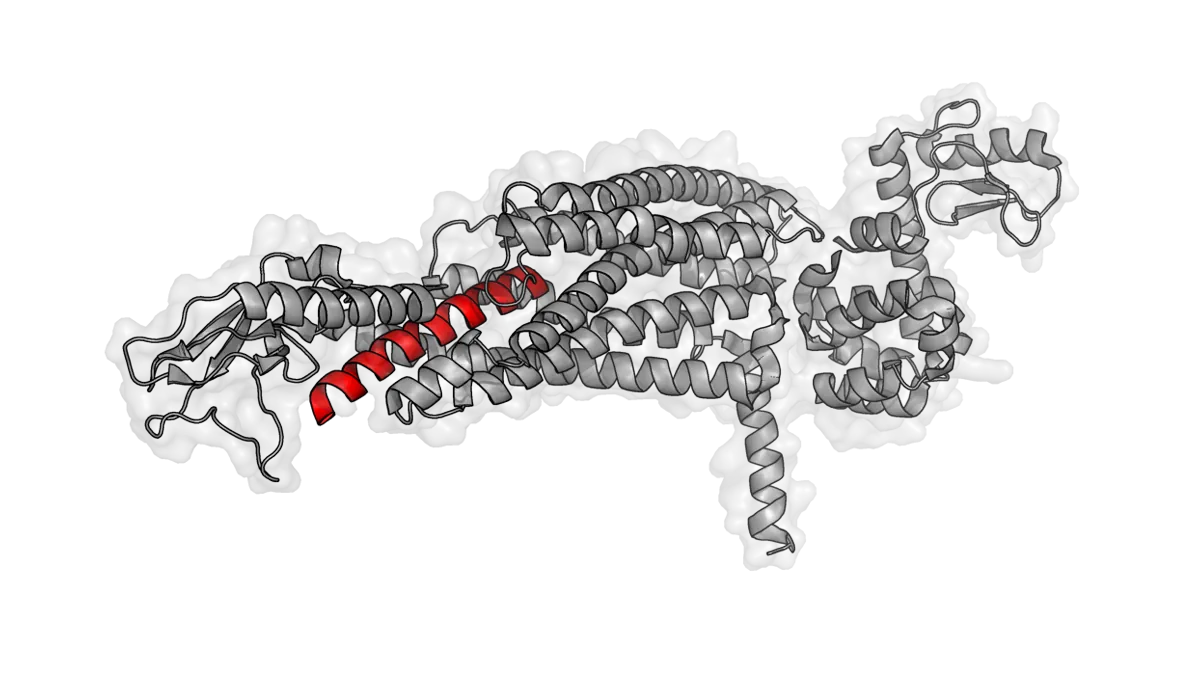
Lilly's discovery paper reported that, in cell assays, LY3437943 had roughly balanced activity at the glucagon and GLP-1 receptors and greater activity at the GIP receptor.2 In obese mice, the authors attributed its effect on body weight partly to reduced food intake (via GIP and GLP-1 receptors) and partly to increased energy expenditure mediated by the glucagon receptor. A 2024 cryo-electron microscopy study solved the structures of retatrutide bound to each of the three receptors, showing that the peptide adopts a single continuous helix in each receptor.3
The same 2022 paper described a phase 1 single-ascending-dose study in which the pharmacokinetic profile supported once-weekly administration.2 A separate 12-week phase 1b multiple-ascending-dose trial in 72 adults with type 2 diabetes reported a half-life of about 6 days, with gastrointestinal events as the most common adverse events.6 These studies were about safety and pharmacology, not efficacy, but they set up the phase 2 program.
Retatrutide phase 2 trials
The phase 2 obesity trial, was published by Jastreboff and colleagues in the New England Journal of Medicine in 2023.7 It randomised 338 adults with obesity, or overweight plus a weight-related condition, to one of several once-weekly retatrutide arms or placebo for 48 weeks. The primary endpoint was percentage change in body weight at 24 weeks. At 48 weeks the least-squares mean change was −24.2% in the highest-dose arm versus −2.1% with placebo. Gastrointestinal adverse events were the most common and were dose-related. The authors also reported dose-dependent increases in heart rate that peaked at 24 weeks and then declined.
In type 2 diabetes, the Rosenstock trial included an active comparator, dulaglutide. HbA1c reductions in two of the higher-dose retatrutide arms were statistically greater than with dulaglutide, and the authors state that these data informed dose selection for phase 3.8 The liver-fat substudy reported that 86% of participants in the highest-dose arm reached normal liver fat (below 5%) at 24 weeks, compared with none on placebo, and that liver-fat reductions tracked changes in body weight and markers of insulin sensitivity.9
The body-composition substudy matters for a common question about whether a larger fall in body weight means more lean mass is lost. The authors reported that the proportion of lean mass lost relative to total weight lost was similar to other obesity treatments. Note that only 103 participants completed both DXA scans, and the paper was written by Lilly employees.10
Retatrutide phase 3: the TRIUMPH and TRANSCEND programs
Lilly's registration program for obesity is called TRIUMPH. Its published design paper describes four phase 3 trials enrolling more than 5,800 participants. TRIUMPH-1 and TRIUMPH-2 use a "basket" design that nests sleep apnoea and/or knee osteoarthritis sub-studies inside a weight-management trial. TRIUMPH-3 enrols people with cardiovascular disease, and TRIUMPH-4 is a stand-alone knee osteoarthritis trial.11 A parallel program, TRANSCEND-T2D, covers type 2 diabetes.
Trial
Population (randomised)
Length
Headline result as reported
Source type
TRIUMPH-4 (NCT05931367)
Obesity or overweight with knee osteoarthritis (445)
68 weeks
Body weight −28.7% (highest-dose arm) vs −2.1% placebo; WOMAC pain score reduced up to 4.5 points12
Topline press release, Dec 2025
TRANSCEND-T2D-1 (NCT06354660)
Type 2 diabetes on diet and exercise alone (537)
40 weeks
HbA1c change −1.69% to −1.94% vs −0.81% placebo (treatment-regimen estimand)13
Three cautions apply when reading this table. First, in our PubMed searches in September 2026 only TRANSCEND-T2D-1 had been published in a peer-reviewed journal; the other figures come from company announcements and may change in the final papers. Second, most of Lilly's headline numbers use the "efficacy estimand", which estimates the effect had everyone stayed on treatment; the "treatment-regimen" estimand, which counts people who stopped, gives smaller numbers (for TRIUMPH-1, −17.6% to −25.0%).5 Third, the ClinicalTrials.gov identifier for TRIUMPH-4 is NCT05931367; Lilly's December 2025 release printed a different number, which on the registry belongs to an unrelated orforglipron trial.
In TRIUMPH-3, major adverse cardiovascular events were less frequent than expected in all arms. The hazard ratios Lilly reported for MACE-5 (0.82) and MACE-3 (1.12) had confidence intervals crossing 1, so the trial does not establish a cardiovascular effect in either direction.1 A dedicated cardiovascular and kidney outcomes trial (NCT06383390, about 10,000 participants) is still running.
What has not reported yet
TRIUMPH-5 (NCT06662383): the first head-to-head trial of retatrutide against tirzepatide, 80 weeks, primary completion estimated November 2026.14
TRANSCEND-T2D-2 (NCT06260722): retatrutide compared with semaglutide in type 2 diabetes.
Further trials in chronic low back pain, weight-maintenance and liver disease.
Safety findings reported so far
Across phase 2 and phase 3, the most frequent adverse events have been gastrointestinal: nausea, diarrhoea, constipation and vomiting. In the phase 2 obesity trial they were dose-related and mostly mild to moderate.7,5 Lilly has also reported dysesthesia (abnormal skin sensation) more often with retatrutide than with placebo, described as mostly mild to moderate. In TRIUMPH-1, discontinuation because of adverse events was 4.1% to 11.3% across retatrutide arms versus 4.9% with placebo.5 In TRIUMPH-4, Lilly said discontinuation rates were higher at higher baseline BMI and included discontinuations for perceived excessive weight loss.12 Full safety tables will only be available once the phase 3 papers are published.
Is retatrutide approved? Retatrutide in Australia
No. Lilly calls retatrutide an investigational molecule, and its July 2026 release says it cannot legally be sold or marketed for human use.1 The company says it is completing the manufacturing (CMC) data package and plans to submit a Biologics License Application to the FDA in the first quarter of 2027.
Australian searches for retatrutide often concern trials and legality. ClinicalTrials.gov lists Australian sites for several of Lilly's phase 3 studies, including TRIUMPH-1 to TRIUMPH-4, the cardiovascular and kidney outcomes trial and a multi-drug liver-disease trial. Sport Integrity Australia names retatrutide among its examples of unapproved peptide products being promoted. It describes unapproved products as goods not included in the Australian Register of Therapeutic Goods.15 For how Australian law treats research peptides generally, see are research peptides legal in Australia? Retatrutide is not named on the 2026 WADA Prohibited List; our guide to peptides and the WADA Prohibited List explains why that is not the same as being permitted.
Retatrutide as a laboratory research compound
Research-grade retatrutide is used in the lab, for example in receptor-signalling assays, analytical method development and animal models. Titan Peptides supplies retatrutide for laboratory research as a lyophilised powder in 10 mg and 20 mg vials. It is not Lilly's clinical-trial material and is not for human or veterinary use. Our guide to storing lyophilised and reconstituted peptides covers temperature, light and moisture.
Open questions in retatrutide research
Peer review: four of the five reported phase 3 trials exist only as topline releases.
Direct comparisons: until TRIUMPH-5 and TRANSCEND-T2D-2 report, any ranking against tirzepatide or semaglutide rests on cross-trial comparison, which is unreliable.
Long-term outcomes: cardiovascular, kidney and liver outcome trials are years from completion.
Mechanism in humans: the glucagon-receptor contribution to energy expenditure was shown in mice;2 how much it contributes in people is still being studied.
Frequently asked questions
What is retatrutide?
Retatrutide, code name LY3437943, is an investigational peptide developed by Eli Lilly. It is a single molecule that activates three hormone receptors: GIP, GLP-1 and glucagon. It has been studied in phase 2 and phase 3 trials in obesity, type 2 diabetes, knee osteoarthritis, sleep apnoea and fatty liver disease, but as of September 2026 it is not an approved medicine in any country.
Is retatrutide approved in Australia?
No. Retatrutide is not approved by the TGA or by any other regulator as of September 2026. Eli Lilly describes it as investigational and says it plans to submit a US application in the first quarter of 2027. Sport Integrity Australia lists retatrutide among its examples of unapproved peptide products being promoted. Several Lilly phase 3 trials have run at Australian sites.
What does triple agonist mean?
A triple agonist is a single molecule that switches on three different receptors. Retatrutide activates the receptors for GIP and GLP-1, two gut hormones called incretins, and for glucagon, a pancreatic hormone. Semaglutide acts on the GLP-1 receptor only and tirzepatide on GIP and GLP-1, so retatrutide adds glucagon-receptor activity to that approach.
What were the retatrutide phase 3 results?
Between December 2025 and July 2026 Lilly announced that five phase 3 trials met their primary endpoints. In TRIUMPH-1, participants without diabetes had mean body-weight changes of −19.0% to −28.3% across dose arms at 80 weeks versus −2.2% with placebo, using the efficacy estimand. Only TRANSCEND-T2D-1 has so far been published in full, in The Lancet.
Is retatrutide the same as tirzepatide?
No. Both are Eli Lilly peptides, but tirzepatide activates two receptors (GIP and GLP-1) and is an approved medicine sold as Mounjaro and Zepbound. Retatrutide also activates the glucagon receptor and remains investigational. A head-to-head phase 3 trial, TRIUMPH-5, is comparing them, with primary completion expected in November 2026.
References
Eli Lilly and Company. Lilly's triple agonist, retatrutide, successful in two additional Phase 3 obesity trials, delivering significant improvements in weight and A1C. Press release, 23 July 2026. Source
Coskun T, Urva S, Roell WC, et al. LY3437943, a novel triple glucagon, GIP, and GLP-1 receptor agonist for glycemic control and weight loss: from discovery to clinical proof of concept. Cell Metab. 2022;34(9):1234-1247.e9. PubMed 35985340
Li W, Zhou Q, Cong Z, et al. Structural insights into the triple agonism at GLP-1R, GIPR and GCGR manifested by retatrutide. Cell Discov. 2024;10(1):77. PubMed 39019866
National Center for Biotechnology Information. PubChem Compound Summary for CID 171390338 (retatrutide substance records, CAS 2381089-83-2, LY3437943). Accessed 21 September 2026. Source
Eli Lilly and Company. Lilly's triple agonist, retatrutide, delivered powerful weight loss in pivotal Phase 3 obesity trial. Press release, 21 May 2026. Source
Urva S, Coskun T, Loh MT, et al. LY3437943, a novel triple GIP, GLP-1, and glucagon receptor agonist in people with type 2 diabetes: a phase 1b, multicentre, double-blind, placebo-controlled, randomised, multiple-ascending dose trial. Lancet. 2022;400(10366):1869-1881. PubMed 36354040
Jastreboff AM, Kaplan LM, Frías JP, et al. Triple-hormone-receptor agonist retatrutide for obesity — a phase 2 trial. N Engl J Med. 2023;389(6):514-526. PubMed 37366315
Rosenstock J, Frias J, Jastreboff AM, et al. Retatrutide, a GIP, GLP-1 and glucagon receptor agonist, for people with type 2 diabetes: a randomised, double-blind, placebo and active-controlled, parallel-group, phase 2 trial conducted in the USA. Lancet. 2023;402(10401):529-544. PubMed 37385280
Sanyal AJ, Kaplan LM, Frias JP, et al. Triple hormone receptor agonist retatrutide for metabolic dysfunction-associated steatotic liver disease: a randomized phase 2a trial. Nat Med. 2024;30(7):2037-2048. PubMed 38858523
Coskun T, Wu Q, Schloot NC, et al. Effects of retatrutide on body composition in people with type 2 diabetes: a substudy of a phase 2, double-blind, parallel-group, placebo-controlled, randomised trial. Lancet Diabetes Endocrinol. 2025;13(8):674-684. PubMed 40609566
Giblin K, Kaplan LM, Somers VK, et al. Retatrutide for the treatment of obesity, obstructive sleep apnea and knee osteoarthritis: rationale and design of the TRIUMPH registrational clinical trials. Diabetes Obes Metab. 2026;28(1):83-93. PubMed 41090431
Eli Lilly and Company. Lilly's triple agonist, retatrutide, delivered weight loss of up to an average of 71.2 lbs along with substantial relief from osteoarthritis pain in first successful Phase 3 trial. Press release, 11 December 2025. Source
Bajaj HS, Welch M, Shah P, et al. Efficacy and safety of retatrutide, a GIP, GLP-1, and glucagon receptor agonist, in people with type 2 diabetes and inadequate glycaemic control with diet and exercise (TRANSCEND-T2D-1): a double-blind, randomised, phase 3 trial. Lancet. 2026;407(10546):2402-2413. PubMed 42250575
ClinicalTrials.gov. A Study of Retatrutide (LY3437943) Compared to Tirzepatide (LY3298176) in Adults Who Have Obesity (TRIUMPH-5). NCT06662383. Record last updated 20 July 2026. Source
Sport Integrity Australia. Peptides explained. Accessed 21 September 2026. Source
Research use only. This article summarises published scientific literature
for educational purposes. It is not medical advice and does not describe or endorse human
or veterinary use. Compounds supplied by Titan Peptides are for laboratory research only
and are not approved therapeutic goods in Australia.
Semaglutide targets one receptor, tirzepatide two and retatrutide three. We compare their pharmacology and published trials, and explain why cross-trial numbers mislead.
Which peptides does the 2026 WADA Prohibited List name, in which section, and what does "not named" really mean? Includes GLP-1 drugs, retatrutide and Sport Integrity Australia.
What the TGA, the June 2026 Poisons Standard, the Therapeutic Goods Act and customs law actually say about peptides, "research use only" labels, importing and advertising in Australia.