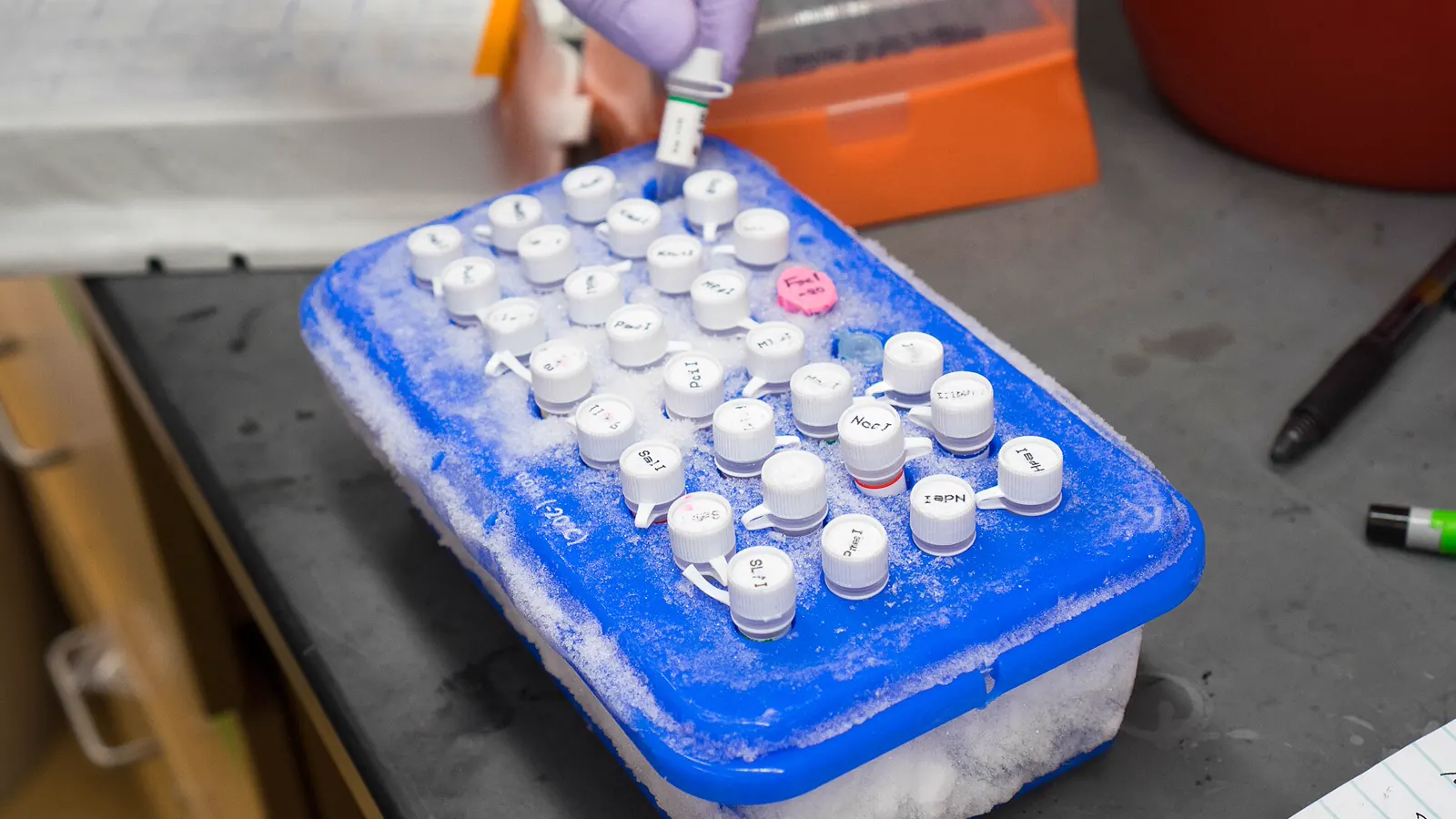
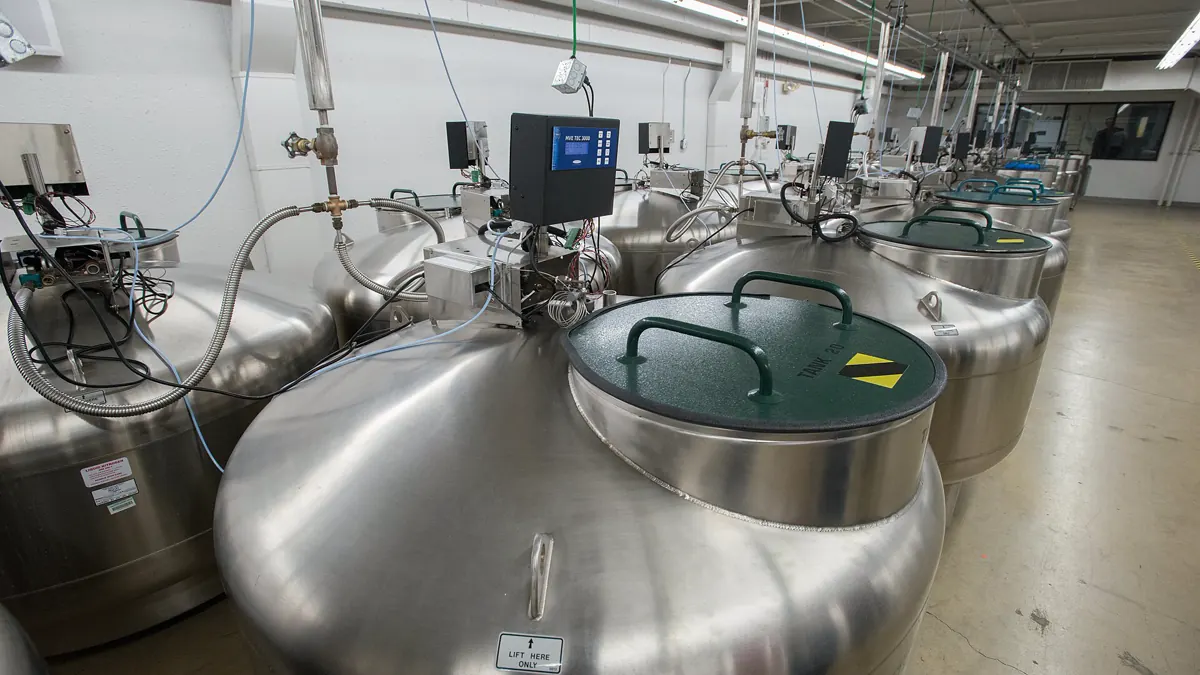
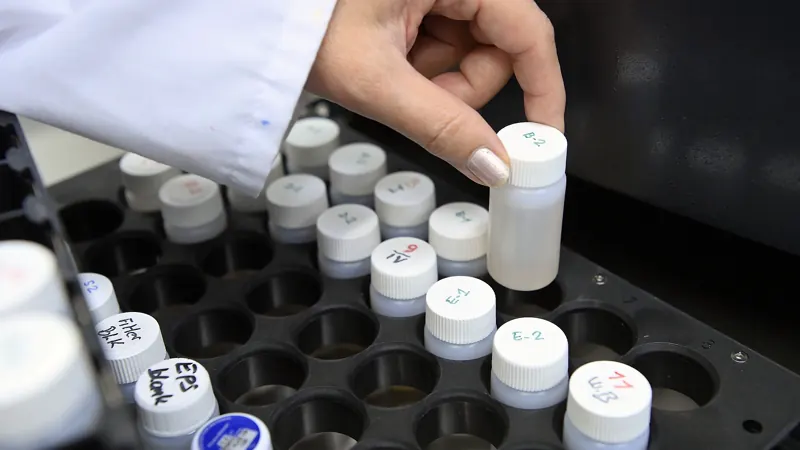
Store lyophilised peptide sealed, dry, dark and frozen: supplier guidance ranges from −20 °C for short-term storage to −80 °C, or below −15 °C, for the long term.
Let a cold vial reach room temperature in a desiccator before opening, because peptides tend to be hygroscopic and absorbed moisture reduces peptide content and stability.
Sequences containing cysteine, methionine or tryptophan oxidise more readily, and asparagine and glutamine residues are prone to deamidation.
Peptide solutions are short-lived: make a concentrated stock, split it into single-use aliquots and freeze them rather than refreezing or keeping solutions for weeks.
Peptides can adsorb to glass and plastic, with losses of 90% or more reported for some cationic peptides at typical experimental concentrations.
How to store peptides: keep lyophilised peptide sealed, dry, dark and frozen, let the vial reach room temperature in a desiccator before you open it, and avoid keeping peptides in solution for longer than you need to. Supplier guidance ranges from −20 °C for short-term storage to −80 °C, or at least below −15 °C, for the long term, and solutions should be split into aliquots and frozen rather than kept for weeks in the fridge.1, 2
The rest of this guide explains why each rule exists, so you can judge a specific sequence rather than follow a checklist blindly. It is written for laboratory handling of research material.
Peptide storage at a glance
Form
Short term
Longer term
Main risks
Lyophilised powder, sealed
−20 °C (Sigma-Aldrich suggests this for 1–2 weeks); some peptides tolerate 4 °C briefly
−80 °C (Sigma-Aldrich), or below −15 °C with −50 °C or lower preferred (Bachem)
Moisture uptake, oxidation, light
Lyophilised powder, opened
Reseal quickly; purge with nitrogen or argon if the sequence contains C, M or W
Return to the freezer in a desiccated secondary container
Condensation on cold powder, air oxidation
Stock solution
Up to about a week at 4 °C for many peptides (Sigma-Aldrich)
Single-use aliquots frozen below −15 °C; "a few weeks" (Bachem)
Sources: Bachem and Sigma-Aldrich handling guidelines.1, 2
Why peptides degrade in storage
Peptides do not simply "go off". They undergo specific chemical reactions, and each storage rule targets one of them. A review of solid-state stability lists deamidation, peptide bond cleavage, oxidation, the Maillard reaction, β-elimination and dimerisation or aggregation as the major reactions affecting peptides and proteins in the dry state, and identifies temperature, moisture content, excipients and the physical state of the solid as the main factors that influence them.3
Deamidation
Asparagine (N) and glutamine (Q) side chains can lose their amide group. In a classic study by Geiger and Clarke, the synthetic hexapeptide VYPNGA deamidated with a half-life of only 1.4 days at 37 °C and pH 7.4, and replacing the glycine after the asparagine with a bulkier leucine or proline slowed degradation 33- to 50-fold.4 Sequence, temperature and pH all matter, which is one reason suppliers advise against storing peptides in solution.1
Oxidation
Peptides containing cysteine (C), methionine (M) or tryptophan (W) are prone to air oxidation, and cysteine-containing peptides oxidise slowly over time at a rate that depends on the sequence and storage conditions.2 Bachem notes that free cysteine thiols "will be rapidly oxidized to the disulfides at pH > 7".1 Two sequences in our catalogue illustrate the point: Semax (MEHFPGP) contains a methionine, and MOTS-c (MRWQEMGYIFYPRKLR) contains two methionines and a tryptophan, as their PubChem records show.5, 6 For sequences like these, keeping oxygen out of the vial matters more than it does for a sequence with none of those residues.
Light
Tryptophan, tyrosine, phenylalanine and cysteine/cystine residues undergo photo-oxidation, and a review of protein biologics notes that light exposure can alter primary, secondary and tertiary structure.7 Sigma-Aldrich advises that it is "always advisable to store away from bright light".2 An amber vial or a closed box inside the freezer costs nothing.
Lyophilised peptide storage, step by step
Log it on arrival. Record the compound, lot number, amount, date received and the storage condition stated on the label or certificate of analysis.
Freeze it sealed. Keep the vial tightly capped at −20 °C or colder and away from light, ideally inside a secondary container with desiccant.1, 2
Warm it before opening. Let the vial reach room temperature in a desiccator before you open or weigh it. Peptides tend to be hygroscopic, and moisture absorbed from the air "reduces the overall peptide content and may also decrease stability".1
Weigh quickly and reseal. For sequences containing C, M or W, Sigma-Aldrich recommends purging the air from the vial and replacing it with nitrogen or argon.2
Avoid repeated freeze–thaw. Sigma-Aldrich advises against it for lyophilised peptides as well as solutions.2 If you will draw on the same lot repeatedly, divide it once into several vials.
Fridge or freezer?
Both suppliers treat the freezer as the default. Bachem notes that peptides may be shipped at room temperature and, for short-term use, kept in a refrigerator at 4 °C; Sigma-Aldrich says that while some peptides are stable at 4 °C, it recommends −20 °C for short-term storage and −80 °C for longer storage.1, 2 A few days at ambient temperature in transit is therefore not unusual, but a vial that will sit for months belongs in the freezer.
The short answer is: briefly. Bachem advises that peptides "should not be stored in solution (even sterile and oxygen-free solution) because they may slowly undergo chemical degradation", that frozen solutions "may be kept for a few weeks", and that long-term storage of solutions is not recommended, especially for sequences containing N, Q, C, M or W.1 Sigma-Aldrich gives a similar picture: peptide solutions are generally stable for up to a week at 4 °C, sterile buffers at pH 5–6 and frozen aliquots prolong storage life, and exposure to pH above 8 should be avoided.2
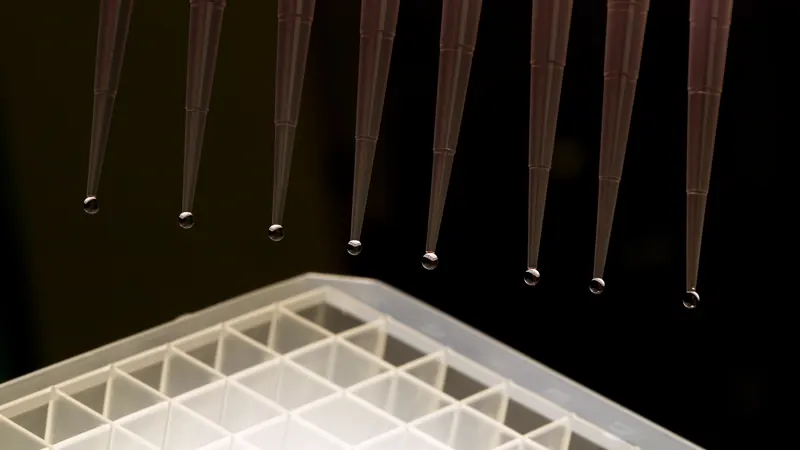
Make a concentrated stock and split it into single-use aliquots, so that each tube is thawed only once.
Freeze the aliquots at −20 °C or colder, and label each with compound, lot, concentration, diluent and date.
Discard a thawed aliquot rather than refreezing it.
Planning aliquots
Size aliquots to the experiment, not to the vial. Suppose 10 mg of peptide is dissolved in 2.0 mL to give a 5 mg/mL stock, and each assay needs about 40 µL of stock. Twenty aliquots of 50 µL use 1.0 mL, leaving a small margin in every tube for pipetting losses, and the remaining 1.0 mL can be split the same way as a second set. Label every tube before it goes into the freezer, keep the aliquots from one lot together, and note on the box how many remain, so that nobody thaws a tube just to count them. The arithmetic for stock and working concentrations is set out in our reconstitution guide, linked above.
Why freeze–thaw cycles matter
Freezing is not gentle. In a study of model enzymes frozen without cryoprotectants, slow freezing with fast thawing preserved the most activity, while fast freezing with slow thawing caused the most damage. The authors attributed the damage to denaturation at the ice–liquid interface during freezing and to recrystallisation during thawing, and found that pH shifts in some buffers during freezing reduced recovery further.8 Those were proteins rather than short peptides, but the practical lesson carries over: freeze each aliquot once, and thaw it once.
How long do peptides last?
There is no universal figure. Stability depends on the sequence (particularly the N, Q, C, M and W residues above), the residual moisture in the powder, the pH and composition of any solution, and the temperature history of the vial.1, 3 Use the storage conditions and any retest or expiry date on the certificate of analysis for your lot, and if a stock's age or history is uncertain, check it again by HPLC rather than assume. Our guide to HPLC and mass spectrometry purity testing explains what that involves.
Signs a stored peptide may have degraded
Visual checks are crude, but they are free. Lyophilised powder that has turned sticky, glassy or shrunken may have taken up moisture, and a solution that is cloudy, discoloured or slow to redissolve after thawing may contain aggregated or degraded material. None of these observations tells you how much intact peptide is left, and a vial can look perfect while its contents have changed.
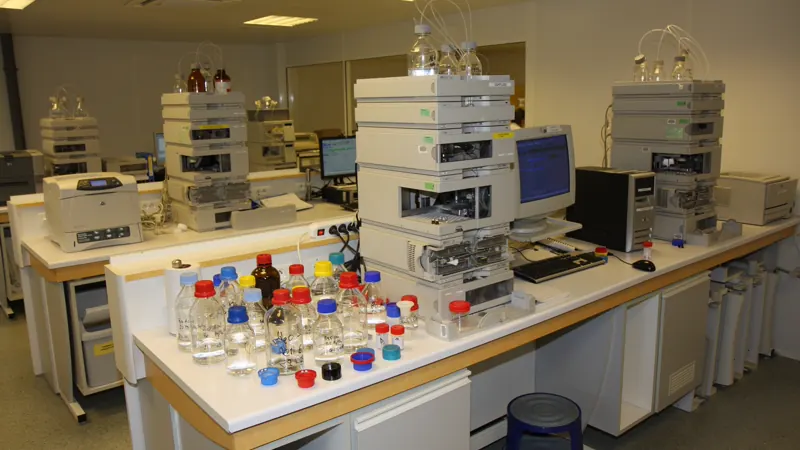
Analytical checks are more informative. On reverse-phase HPLC, degradation typically shows up as new or growing impurity peaks beside the main peak. Mass spectrometry can then point to the chemistry: oxidation of a methionine adds about 16 Da (one oxygen atom), deamidation of an asparagine or glutamine adds about 1 Da, and a dimer appears at roughly twice the expected mass. Deamidation also produces isomerised and racemised forms that share the same mass, which is why chromatographic separation matters as well as the mass reading.4 If a result matters, compare the stored material with the certificate of analysis for the same lot, or with a freshly opened vial.
Containers: glass, plastic and adsorption losses
Peptides stick to surfaces, and the loss can be large enough to ruin an experiment. When three cationic membrane-active peptides (mastoparan X, melittin and magainin 2) were measured by HPLC, 90% or more could be lost from solution at typical experimental concentrations through rapid adsorption to the walls of common glass and plastic containers.9 A separate study of radiolabelled endocrine peptides, including ghrelin, GLP-1, insulin and leptin, found important differences in binding between surfaces; siliconising the tubes decreased recovery, whereas adding 1% bovine serum albumin improved it.10
Choose containers for the peptide rather than by habit, and measure recovery if you work at low concentrations.
Store stocks concentrated and dilute into assay buffer shortly before use.
Where the assay tolerates it, a carrier protein can reduce losses.10
Low-binding tubes are worth testing, but verify their performance with your peptide rather than assume it.
Keep the sealed vial dry, dark and frozen. Supplier guidance ranges from −20 °C for short-term storage to −80 °C, or at least below −15 °C, for longer periods. Store it with desiccant, let it reach room temperature in a desiccator before opening so that moisture does not condense on the powder, and avoid repeated freeze–thaw cycles.
How long do peptides last after reconstitution?
Not long, and it depends on the sequence. Sigma-Aldrich says peptide solutions are generally stable for up to a week at 4 °C, and Bachem says frozen solutions may be kept for a few weeks but advises against long-term storage in solution, especially for sequences containing asparagine, glutamine, cysteine, methionine or tryptophan. Frozen single-use aliquots last longest.
Can peptides be stored at room temperature?
Only briefly, and only as dry powder. Bachem notes that lyophilised peptides may be shipped at room temperature, but both Bachem and Sigma-Aldrich recommend freezer storage for anything beyond short-term use. Peptide solutions should be refrigerated for use within days or frozen in single-use aliquots, not left on the bench.
Should peptides be stored in the fridge or the freezer?
The freezer, for anything longer than short-term use. Sigma-Aldrich recommends −20 °C for short-term storage and −80 °C for longer storage, and Bachem recommends below −15 °C, with −50 °C or lower preferred for long-term storage. A refrigerator at 4 °C is acceptable for short-term use of some peptides and for solutions you will use within days.
Why do peptide vials need to warm up before opening?
Because cold powder draws moisture from the air. Peptides tend to be hygroscopic, and opening a cold vial lets water condense on the lyophilised cake. Bachem notes that absorbed moisture reduces the overall peptide content and may decrease stability, so it recommends letting the container reach ambient temperature in a desiccator before opening and weighing.
References
Bachem. Handling and storage guidelines for peptides (Peptide Guide, chapter 6). Accessed September 2026. Source
Sigma-Aldrich (Merck). Handling and storage guidelines for peptides and proteins. Accessed September 2026. Source
Lai MC, Topp EM. Solid-state chemical stability of proteins and peptides. J Pharm Sci. 1999;88(5):489-500. PubMed 10229638
Geiger T, Clarke S. Deamidation, isomerization, and racemization at asparaginyl and aspartyl residues in peptides. Succinimide-linked reactions that contribute to protein degradation. J Biol Chem. 1987;262(2):785-94. PubMed 3805008
PubChem. Semax (Met-Glu-His-Phe-Pro-Gly-Pro), CID 9811102. National Center for Biotechnology Information. Source
PubChem. MOTS-c (H-MRWQEMGYIFYPRKLR-OH), CID 146675088. National Center for Biotechnology Information. Source
Kerwin BA, Remmele RL Jr. Protect from light: photodegradation and protein biologics. J Pharm Sci. 2007;96(6):1468-79. PubMed 17230445
Cao E, Chen Y, Cui Z, Foster PR. Effect of freezing and thawing rates on denaturation of proteins in aqueous solutions. Biotechnol Bioeng. 2003;82(6):684-90. PubMed 12673768
Kristensen K, Henriksen JR, Andresen TL. Adsorption of cationic peptides to solid surfaces of glass and plastic. PLoS One. 2015;10(5):e0122419. PubMed 25932639
Goebel-Stengel M, Stengel A, Taché Y, Reeve JR Jr. The importance of using the optimal plasticware and glassware in studies involving peptides. Anal Biochem. 2011;414(1):38-46. PubMed 21315060
Research use only. This article summarises published scientific literature
for educational purposes. It is not medical advice and does not describe or endorse human
or veterinary use. Compounds supplied by Titan Peptides are for laboratory research only
and are not approved therapeutic goods in Australia.
What bacteriostatic water actually contains, how it compares with sterile water, when benzyl alcohol can interfere, and how to reconstitute a lyophilised peptide and calculate stock concentrations.
How reverse-phase HPLC and mass spectrometry are used to test peptide purity and identity, how to read a chromatogram and a mass spectrum, and what each method cannot tell you.
A plain-English primer on research peptides: what a peptide is, how peptides are built one amino acid at a time on a resin bead, why they arrive as a freeze-dried powder, and what "research use only" does and does not mean.