GHK-Cu is the copper(II) complex of the tripeptide glycyl-L-histidyl-L-lysine (GHK), first reported in human plasma in 1973.
Most of the evidence is from cell culture and animal wound models, including collagen synthesis in fibroblasts and gene-expression studies.
Controlled human evidence is thin: a 1992 randomised trial in venous ulcers found a copper tripeptide cream no better than placebo.
"Copper peptide" is a loose label; AHK-Cu, used in a much-cited hair-follicle study, is a different compound from GHK-Cu.
GHK-Cu is the copper(II) complex of GHK (glycyl-L-histidyl-L-lysine), a tripeptide first reported in human plasma in 1973, and it is the copper peptide best known from skin-care formulations. Its research record is mostly cell-culture and animal work on collagen synthesis and wound models. Controlled clinical evidence is limited, and one randomised trial in venous leg ulcers found no difference between a copper tripeptide cream and placebo.1,2,3
This overview covers the chemistry of the complex, what the laboratory and animal studies reported, what the human evidence does and does not show, and how to keep "copper peptide" terminology straight.
What is GHK-Cu?
In 1973, Loren Pickart and Michael Thaler reported a tripeptide in human serum that prolonged the survival of normal liver cells and stimulated growth in neoplastic liver tissue in culture.1 That tripeptide, GHK, binds copper(II) strongly. Equilibrium studies published in 1981 showed that it can compete with albumin for copper at pH 7.5, and electron paramagnetic resonance work in 1983 indicated that the copper is held by three nitrogen atoms and one oxygen atom in a square-planar arrangement.4,5
In their reviews, Pickart and colleagues report plasma GHK levels of about 200 ng/mL at age 20, falling to about 80 ng/mL by age 60.6 One further detail explains some of the interest from wound researchers: the GHK sequence occurs within the α2(I) chain of type I collagen, and Maquart and colleagues suggested it might be released by proteases at the site of a wound.2
GHK-Cu at a glance
Property
Value
Class
Copper(II)–tripeptide complex
Sequence (one-letter)
GHK (Gly-His-Lys), complexed with Cu(II)
Molecular formula (PubChem)
C14H23CuN6O4+ for the 1:1 copper complex as recorded (prezatide copper); C14H24N6O4 for free GHK
Molar mass (PubChem)
402.92 g/mol (1:1 complex as recorded); 340.38 g/mol (free GHK)
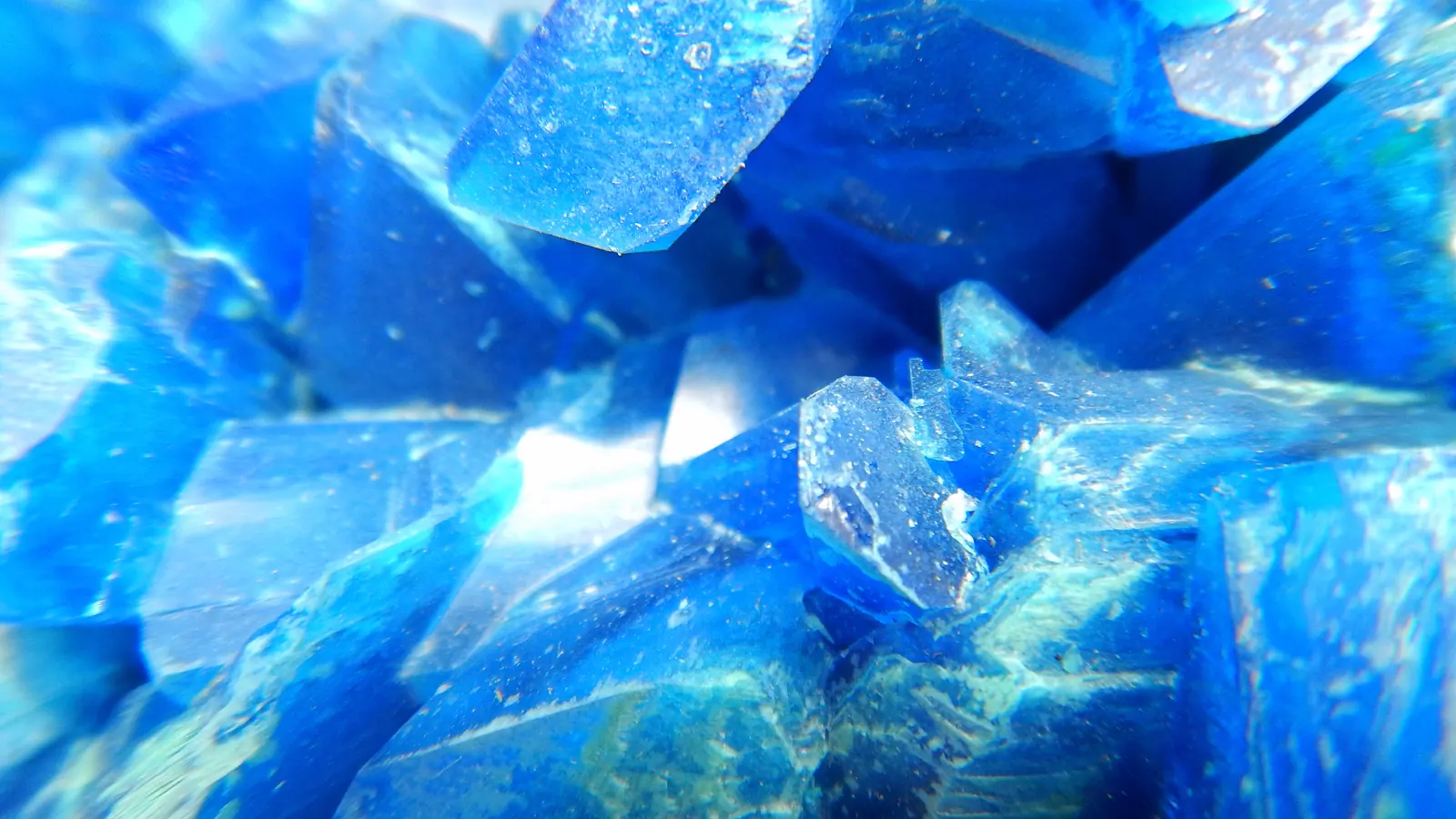
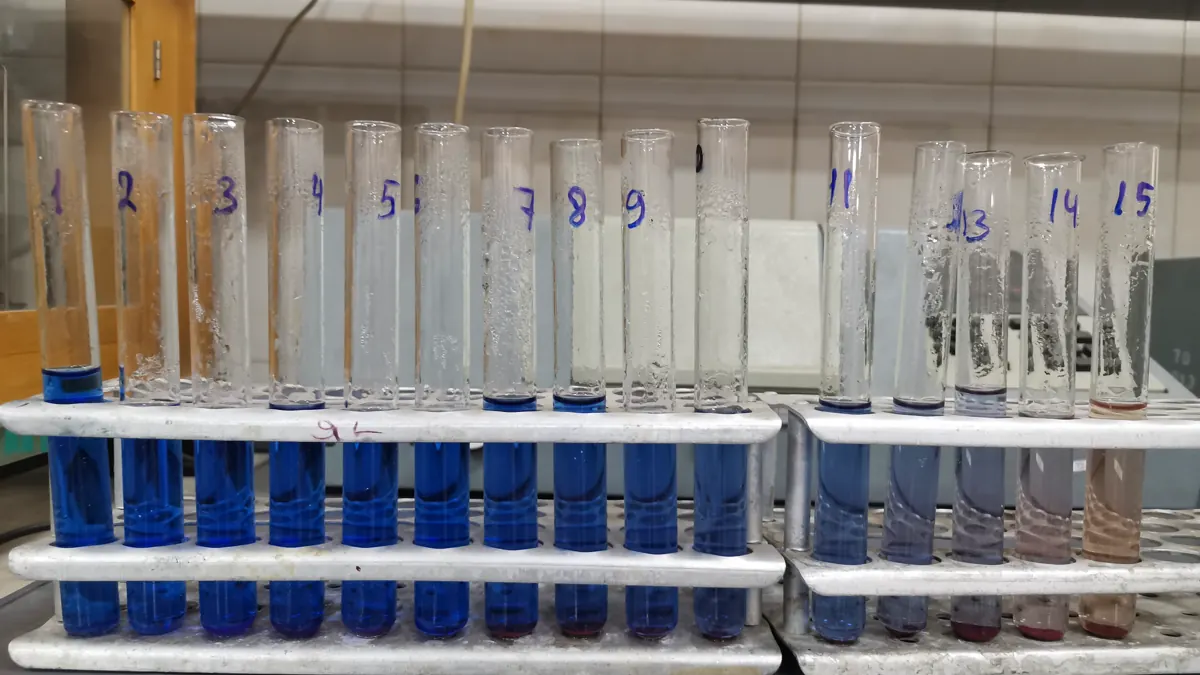
PubChem holds several records for "GHK-Cu" that differ in charge and stoichiometry, including a 2:1 peptide-to-copper complex (C28H46CuN12O8, 742.3 g/mol). The formula and mass printed on a supplier's documentation therefore depend on which form, and which counter-ions, are being described, and are worth checking against the record they claim to match.7 Solutions of the complex are blue, the usual colour of copper(II) compounds of this type.
What has GHK-Cu been studied for?
Collagen and extracellular matrix in cell culture
The foundational laboratory finding came in 1988, when Maquart and colleagues reported that GHK-Cu stimulated collagen synthesis by fibroblasts in culture. The effect began at concentrations between 10⁻¹² and 10⁻¹¹ M, peaked at 10⁻⁹ M, and was independent of any change in cell number.2
A later study from the same French group used a rat wound-chamber model. Repeated injections of GHK-Cu in this model increased the amount of wound tissue, with more type I collagen and glycosaminoglycans. It also raised messenger RNA for decorin, a small proteoglycan of the dermis, and lowered that for biglycan; decorin expression also rose in cultured rat dermal fibroblasts.8
Animal wound models
A 2015 review by Pickart and colleagues summarises animal studies in which GHK-Cu was associated with faster wound healing and more blood-vessel formation in rabbits, systemic wound-healing effects in rats, mice and pigs, and better healing of diabetic and ischaemic wounds in rats.6 Much of the summary literature on GHK-Cu is written by its discoverer and co-authors from one research group, so studies without them among the authors, such as the 2000 Reims wound-chamber work above, are useful checks.
Gene-expression studies
In 2012, a team led from Boston University profiled lung tissue from smokers with chronic obstructive pulmonary disease (COPD) and used the Connectivity Map, a database of drug-induced gene-expression profiles, to search for compounds that reverse the gene signature associated with emphysema severity. The team identified 127 genes whose expression tracked regional emphysema severity: genes that rose with tissue destruction were linked to inflammation, while those that fell were enriched in tissue-repair processes, including the TGFβ pathway. GHK emerged as a compound whose profile reversed that signature, and in human fibroblasts it reproduced TGFβ-like expression patterns and raised integrin β1. Adding GHK also restored collagen I gel contraction and remodelling by fibroblasts grown from COPD lungs.9 Note that this work tested GHK itself rather than the pre-formed copper complex.
Pickart and Margolina's 2018 review builds on data of this kind to propose that GHK influences many biochemical pathways.10 Those proposals rest largely on gene-expression data and laboratory models; a change in a gene signature in cultured cells is a starting point for research, not evidence of an effect in people.
Controlled clinical data are sparse, and the clearest trial is negative. In a 1992 prospective, randomised, evaluator-blinded trial in 86 evaluable patients with venous stasis ulcers, a 0.4% tripeptide–copper complex cream (indexed in MEDLINE under glycyl-histidyl-lysine) performed no better than an inert placebo cream, while 1% silver sulfadiazine cream reduced ulcer size more than either.3 The authors noted that bacterial levels were comparable across the ulcers before treatment, and suggested the silver sulfadiazine result reflected support for epithelialisation rather than an antibacterial effect. The trial tested one formulation in one type of chronic wound, so it does not settle every question about GHK-Cu, but it is the most rigorous human test of a copper tripeptide product that we found in PubMed, and its result was null.
Reviews by GHK's discoverer describe placebo-controlled cosmetic studies in women with photo-aged facial skin. Checking the reference list of the 2015 review shows those facial studies are cited to a 1998 pilot study, a 2002 dermatology meeting presentation, a university report and a 2005 book chapter, rather than to randomised trials published in indexed peer-reviewed journals.6 That does not make the findings wrong, but it does make them hard to evaluate independently.
Delivery through skin is a further open question for topical research. A 2025 review notes that GHK-Cu is fairly hydrophilic and permeates the lipid-rich outer layer of the skin, the stratum corneum, poorly, and that transport of liposome-encapsulated GHK-Cu has received little study.11 For other applications, a 2026 review for orthopaedic and sports medicine physicians found that no clinical data support the use of GHK-Cu for musculoskeletal conditions.12
Evidence summary
Area
Main model
What was reported
Collagen synthesis
Fibroblast culture
Stimulation from 10⁻¹² M, maximal at 10⁻⁹ M
Wound matrix
Rat wound chambers; rat dermal fibroblasts
More collagen and glycosaminoglycans; decorin up, biglycan down
COPD gene signature
Human lung tissue data; fibroblasts in vitro
Emphysema-related signature reversed; collagen gel remodelling restored
Because GHK-Cu sits at the boundary between cosmetic marketing and laboratory science, claims about it vary widely in quality. Five questions help:
Which compound was tested? GHK-Cu, free GHK, AHK-Cu and other copper complexes appear in the literature under overlapping names. Check the sequence, not the label.7,13
What was the model? Most findings come from fibroblast cultures, rat wound chambers and gene-expression databases. Each is a legitimate research tool, and none is a human outcome.
At what concentration? The collagen effect in culture was maximal at 10⁻⁹ M.2 Whether a comparable concentration is reached in a tissue depends on delivery, which for skin is itself an open research question.11
Was it peer-reviewed and controlled? Several widely repeated skin findings trace back to meeting presentations and reports rather than indexed trials.6
Who wrote the summary? Reviews by the compound's discoverer are informative but not independent; look for replication by unconnected groups.
Copper peptide, copper tripeptide-1 and AHK-Cu: sorting out the names
"Copper peptide" is a loose label. In cosmetic ingredient lists, GHK-Cu usually appears as copper tripeptide-1, and its nonproprietary drug name is prezatide copper.7 Other copper–peptide complexes exist, and they are not interchangeable.
A frequently cited hair-follicle study, for example, used AHK-Cu (L-alanyl-L-histidyl-L-lysine–Cu²⁺), not GHK-Cu. It reported that AHK-Cu elongated human hair follicles ex vivo and increased proliferation of cultured dermal papilla cells.13 Results for one complex should not be attributed to the other, and when a study is described only as testing a "copper peptide", the first question is which peptide it was.
Regulatory and safety notes
In the United States, the FDA's list of bulk drug substances that may present significant safety risks in compounding includes "GHK-Cu (for injectable routes of administration)". On the version current as of 22 April 2026, it appears among substances previously in category 2 whose nominations were withdrawn. The FDA's stated concern is that compounded injectable GHK-Cu "may pose risk for immunogenicity due to the potential for aggregation and peptide-related impurities", and that "there are limited data in humans to inform safety-related considerations".14
In Australia, the June 2026 Poisons Standard has no entry that names GHK-Cu. It does contain a Schedule 4 entry for "copper compounds for human use", with exceptions that include preparations containing 5% or less of copper compounds.15 The instrument also notes that the labelling exemption for poisons sold solely for laboratory use does not extend to controls on supply.15 How general entries like that apply to a particular product is covered in our guide to research peptides and Australian law.
Handling GHK-Cu in the laboratory
GHK-Cu's copper centre adds considerations that plain peptides do not have. Its speciation depends on pH: the 1981 and 1983 studies documented several copper–GHK species across the pH range they tested, so buffer choice can change what is actually in solution.4,5 The blue colour of the complex should also be considered when choosing absorbance-based or colorimetric assays, and the stated form (1:1 or 2:1 complex, and any counter-ion) matters when converting a weighed mass into a molar concentration. For example, 50 mg corresponds to about 124 µmol if the material is the 1:1 complex at the 402.92 g/mol PubChem records, but about 67 µmol of complex if it is the 2:1 form at 742.3 g/mol, a difference of almost a factor of two in any calculated concentration.7 Where documentation does not state the form, the mass alone cannot tell you which calculation is right.
GHK-Cu is the copper(II) complex of the tripeptide glycyl-L-histidyl-L-lysine, known as GHK. The peptide was first reported in human plasma in 1973 and binds copper strongly. It has been studied mainly in cell culture and animal wound models, especially for effects on collagen and other components of the extracellular matrix.
Is GHK-Cu the same as copper peptide?
GHK-Cu is the best-known copper peptide, but the term is loose. In cosmetic ingredient lists GHK-Cu usually appears as copper tripeptide-1, and its drug nonproprietary name is prezatide copper. Other complexes, such as AHK-Cu, are different compounds, so research on one should not be attributed to another.
Has GHK-Cu been tested in clinical trials?
Only to a limited extent. The clearest randomised trial, published in 1992 in 86 evaluable patients with venous stasis ulcers, found a copper tripeptide cream no better than placebo. Cosmetic studies on facial skin are cited in reviews, but mostly to meeting presentations, reports and book chapters rather than indexed peer-reviewed trials.
Why is GHK-Cu blue?
The colour comes from the copper(II) ion bound to the peptide. Copper(II) complexes with nitrogen and oxygen ligands typically appear blue. Studies of the complex found copper held by three nitrogen atoms and one oxygen atom, and documented several copper–GHK species across the pH range, so shade and intensity can vary with conditions.
What has the FDA said about GHK-Cu?
The FDA lists GHK-Cu for injectable routes on its page of bulk drug substances that may present significant safety risks in compounding. It cites possible immunogenicity from aggregation and peptide-related impurities, and limited human safety data. As of April 2026 it sits among substances whose category 2 nominations were withdrawn, which is not an approval.
References
Pickart L, Thaler MM. Tripeptide in human serum which prolongs survival of normal liver cells and stimulates growth in neoplastic liver. Nat New Biol. 1973;243(124):85-7. PubMed 4349963
Maquart FX, Pickart L, Laurent M, Gillery P, Monboisse JC, Borel JP. Stimulation of collagen synthesis in fibroblast cultures by the tripeptide-copper complex glycyl-L-histidyl-L-lysine-Cu2+. FEBS Lett. 1988;238(2):343-6. PubMed 3169264
Bishop JB, Phillips LG, Mustoe TA, et al. A prospective randomized evaluator-blinded trial of two potential wound healing agents for the treatment of venous stasis ulcers. J Vasc Surg. 1992;16(2):251-7. PubMed 1495150
Lau SJ, Sarkar B. The interaction of copper(II) and glycyl-L-histidyl-L-lysine, a growth-modulating tripeptide from plasma. Biochem J. 1981;199(3):649-56. PubMed 7340824
Laussac JP, Haran R, Sarkar B. N.m.r. and e.p.r. investigation of the interaction of copper(II) and glycyl-L-histidyl-L-lysine, a growth-modulating tripeptide from plasma. Biochem J. 1983;209(2):533-9. PubMed 6303307
Pickart L, Vasquez-Soltero JM, Margolina A. GHK Peptide as a Natural Modulator of Multiple Cellular Pathways in Skin Regeneration. Biomed Res Int. 2015;2015:648108. PubMed 26236730
National Center for Biotechnology Information. PubChem Compound Summaries for CID 71587328 (prezatide copper / copper tripeptide-1), CID 73587 (glycyl-L-histidyl-L-lysine) and CID 9831891 (bisprezatide copper). Accessed September 2026. Source
Siméon A, Wegrowski Y, Bontemps Y, Maquart FX. Expression of glycosaminoglycans and small proteoglycans in wounds: modulation by the tripeptide-copper complex glycyl-L-histidyl-L-lysine-Cu(2+). J Invest Dermatol. 2000;115(6):962-8. PubMed 11121126
Campbell JD, McDonough JE, Zeskind JE, et al. A gene expression signature of emphysema-related lung destruction and its reversal by the tripeptide GHK. Genome Med. 2012;4(8):67. PubMed 22937864
Pickart L, Margolina A. Regenerative and Protective Actions of the GHK-Cu Peptide in the Light of the New Gene Data. Int J Mol Sci. 2018;19(7):1987. PubMed 29986520
Ogórek K, Nowak K, Wadych E, Ruzik L, Timerbaev AR, Matczuk M. Are We Ready to Measure Skin Permeation of Modern Antiaging GHK-Cu Tripeptide Encapsulated in Liposomes? Molecules. 2025;30(1):136. PubMed 39795193
Mayfield CK, Bolia IK, Feingold CL, et al. Injectable Peptide Therapy: A Primer for Orthopaedic and Sports Medicine Physicians. Am J Sports Med. 2026;54(1):223-229. PubMed 41476424
Pyo HK, Yoo HG, Won CH, et al. The effect of tripeptide-copper complex on human hair growth in vitro. Arch Pharm Res. 2007;30(7):834-9. PubMed 17703734
US Food and Drug Administration. Certain Bulk Drug Substances for Use in Compounding that May Present Significant Safety Risks (content current as of 22 April 2026). Source
Therapeutic Goods (Poisons Standard—June 2026) Instrument 2026 (F2026L00633), registered 28 May 2026, commenced 1 June 2026. Schedule 4 and Appendix D, clause 5. Federal Register of Legislation. Source
Research use only. This article summarises published scientific literature
for educational purposes. It is not medical advice and does not describe or endorse human
or veterinary use. Compounds supplied by Titan Peptides are for laboratory research only
and are not approved therapeutic goods in Australia.
A plain-English primer on research peptides: what a peptide is, how peptides are built one amino acid at a time on a resin bead, why they arrive as a freeze-dried powder, and what "research use only" does and does not mean.
A laboratory guide to storing lyophilised and reconstituted peptides: freezer temperatures, moisture, oxidation-prone residues, light, freeze–thaw cycles and adsorption to containers.
What the TGA, the June 2026 Poisons Standard, the Therapeutic Goods Act and customs law actually say about peptides, "research use only" labels, importing and advertising in Australia.