Doping-control laboratories identified the active ingredient of products sold as TB-500 as Ac-LKKTETQ, an N-acetylated copy of residues 17–23 of thymosin beta-4.
Thymosin beta-4 is a 43-residue actin-binding peptide; TB-500 is a seven-residue fragment of it, about 889 g/mol against about 4,963 g/mol.
Most published research, including every human trial we found, used full-length thymosin beta-4, and the FDA says it has identified no human exposure data for the fragment.
In the June 2026 Poisons Standard, TB-500 and thymosin beta 4 are each in Schedule 4 and Appendix D, clause 5; WADA prohibits thymosin-β4 and its derivatives at all times.
TB-500 is a synthetic peptide based on a short active region of thymosin beta-4 (Tβ4), not the full protein. Doping-control laboratories that analysed products sold as TB-500 identified the key ingredient as Ac-LKKTETQ: residues 17–23 of Tβ4 with an acetyl group added to the N-terminus. Most published research, including the human trials, used full-length thymosin beta-4, and the US FDA says it has not identified human exposure data for the fragment, so findings for one cannot simply be applied to the other.1,2,3
This guide covers what TB-500 is, where descriptions of it differ, what thymosin beta-4 does in cells, what the fragment and the full protein have each been studied for, and how TB-500 is treated in Australia and in sport.
What is TB-500?
Two independent analytical studies published in 2012 tie the name to a specific molecule. The doping control laboratory at Ghent University analysed a product called TB-500 by liquid chromatography with high-resolution mass spectrometry and identified the N-terminally acetylated 17–23 fragment of human Tβ4, Ac-LKKTETQ; the team then made the same peptide by solid-phase synthesis to confirm the assignment.1 The Hong Kong Jockey Club's racing laboratory described TB-500 as a veterinary preparation whose key ingredient is the peptide LKKTETQ "with artificial acetylation of the N-terminus", and developed a method to detect it and its metabolites in horse urine and plasma.2
PubChem's record for TB-500 lists the same structure, Ac-Leu-Lys-Lys-Thr-Glu-Thr-Gln-OH, and the US FDA refers to "thymosin beta-4, fragment (LKKTETQ), also known as TB-500".3,4
Synthetic copy of Tβ4 residues 17–23 with an added N-terminal acetyl group
Encoded by the TMSB4X gene; first isolated from bovine thymus
Other names
TB 500
Tβ4, timbetasin, Fx peptide
Values are from the PubChem records for each compound; the sequence and gene are from UniProt entry P62328, and the thymus origin from a 2007 development review.4,5,6
Where descriptions of TB-500 differ
Descriptions of TB-500 are not perfectly consistent, and the differences matter when reading the literature:
Fragment or whole protein. The analytical and regulatory sources above treat TB-500 as the seven-residue fragment. The Poisons Standard lists "TB-500" and "thymosin beta 4" as separate entries, and the WADA Prohibited List calls TB-500 a derivative of thymosin-β4.7,8 Because "TB-500" is a product name rather than an official nonproprietary name (PubChem lists timbetasin for Tβ4 itself), the label on a vial does not define its contents; the documented sequence and mass do.4
Where the actin-binding motif ends. Philp and colleagues (2003) described a seven-amino-acid actin-binding motif, and the Hong Kong group calls 17-LKKTETQ-23 the active site responsible for actin binding.2,9 A 2010 review phrases it differently, as "LKKTETQ, the central actin-binding domain (aa 17-23) plus 1 additional amino acid (Q)", so sources do not agree exactly on the boundaries of the core motif.10
Residue numbering. "17–23" counts from the acetylated serine that begins the mature protein. UniProt's reference sequence includes the initiator methionine that is removed from the mature chain, so the same residues are numbered 18–24 there.5
What is thymosin beta-4?
Tβ4 is a highly conserved, acidic peptide of 43 amino acids, present in most tissues and found in high concentrations in blood platelets, neutrophils and macrophages.6 Its best-established role is structural: it binds monomeric (G-) actin and is regarded as the main G-actin-sequestering peptide in mammalian cells, which affects how cells build and remodel their actin cytoskeleton, and therefore how they move.9
Researchers have mapped several separate active sites within the molecule. A 2010 review associates the N-terminal tetrapeptide Ac-SDKP with reduced inflammation and fibrosis in experimental models, an N-terminal 15-residue region with cell survival, and the central LKKTETQ region with angiogenesis, wound healing and cell migration.10 That mapping is the scientific basis for studying the LKKTETQ fragment on its own, and it is also a reminder that the fragment lacks the other active regions of the full protein.
What have TB-500 and thymosin beta-4 been studied for?
Full-length Tβ4 in animal models
In a 1999 study in a rat full-thickness wound model, topical or intraperitoneal Tβ4 was reported to increase re-epithelialisation by 42% over saline at day 4 and by up to 61% at day 7, with more collagen deposition and angiogenesis in treated wounds; in a Boyden chamber assay it also increased keratinocyte migration.11 In a 2004 mouse study published in Nature, Tβ4 formed a complex with the proteins PINCH and integrin-linked kinase, activated the survival kinase Akt, and after coronary artery ligation was associated with better early cardiomyocyte survival and cardiac function.12
The LKKTETQ fragment itself
Fragment-specific data are much thinner. Using natural Tβ4, proteolytic fragments and synthetic peptides, Philp and colleagues found in 2003 that the seven-residue actin-binding motif matched full-length Tβ4 in human umbilical vein endothelial cell migration and chick aortic-arch sprouting assays at about 50 nM, while peptides lacking any part of the motif were inactive.9 These are in vitro and ex vivo results. A 2026 primer in the American Journal of Sports Medicine concluded that Tβ4 and TB-500 "promoted angiogenesis and tissue repair in preclinical models, but human orthopaedic data are lacking".13
Human trials: full-length Tβ4 only
Every human study we found in PubMed used the whole protein. In a phase I trial published in 2010, healthy volunteers in four cohorts of 10 received intravenous synthetic Tβ4 or placebo, first as a single dose and then daily for 14 days; adverse events were infrequent and mild or moderate, and there was no dose-limiting toxicity.14 Tβ4 eye drops (RGN-259) were tested in phase II dry-eye trials. In a 72-person randomised trial using a controlled adverse environment model, neither primary endpoint differed significantly from placebo, although several secondary measures did.15
For the fragment, the FDA states that it "has not identified any human exposure data" on drug products containing thymosin beta-4 fragment and lacks important safety information, and it cites a possible risk of immunogenicity from aggregation and peptide-related impurities. On the FDA page current as of 22 April 2026, the fragment appears among substances previously placed in category 2 whose compounding nominations were withdrawn.3 Any claim about what TB-500 does in people therefore rests on extrapolation from a different, much larger molecule.
Phase I intravenous safety trial; phase II eye-drop trials
Why thymosin beta-4 results may not transfer to TB-500
It is tempting to read the large Tβ4 literature as if it described TB-500. There are four reasons to be careful:
The fragment carries one active region, not all of them. Ac-SDKP and the N-terminal survival region mapped in the 2010 review are absent from Ac-LKKTETQ.10
Some signalling findings were shown only for the full protein. The PINCH and integrin-linked kinase complex described in the 2004 mouse heart study was demonstrated with full-length Tβ4; the studies cited here do not establish whether the fragment engages it.12
The acetyl group is artificial. Inside natural Tβ4, leucine 17 is joined to the preceding lysine, so the N-acetylated fragment is a designed molecule rather than a piece cut from the protein.2
Equal activity in a dish is a narrow finding. Matching full-length Tβ4 in two assays at one concentration does not show equivalence in tissue, where size, stability and clearance all differ.9
What doping-control research adds
Some of the few peer-reviewed papers that characterise TB-500 itself come from anti-doping science. The Ghent group proposed a strategy for detecting Ac-LKKTETQ in plasma and urine by liquid chromatography with triple-quadrupole mass spectrometry.1 The Hong Kong group first identified likely metabolites of the peptide in vitro, then isolated the parent peptide and its metabolites from equine urine and plasma by solid-phase extraction on ion-exchange cartridges and confirmed them by LC-MS in samples from horses given a single administration of TB-500, which they described as the first identification of TB-500 and its metabolites in post-administration samples.2 For researchers, these papers are useful as references for how the fragment and its breakdown products behave analytically.
TB-500 in Australia and in sport
People searching "TB500 Australia" usually want the legal position. In the June 2026 Poisons Standard, TB-500 and thymosin beta 4 each have their own entry in Schedule 4 (prescription-only medicines), and each is also listed in Appendix D, clause 5, which covers poisons that "must not be possessed by a person without authority (for example, possession other than in accordance with a legal prescription)".7 Scheduling is implemented through state and territory legislation; our guide to research peptides and Australian law explains how that works.
The 2026 WADA Prohibited List names "Thymosin-β4 and its derivatives e.g. TB-500" under S2.3, growth factors and growth factor modulators, which are prohibited at all times.8 Detection methods have been published: the Hong Kong method confirmed N-acetylated LKKTETQ at 0.02 ng/mL in equine plasma and 0.01 ng/mL in equine urine.2 Our article on peptides and the WADA Prohibited List has more on the anti-doping classes.
Checking what a TB-500 sample actually is
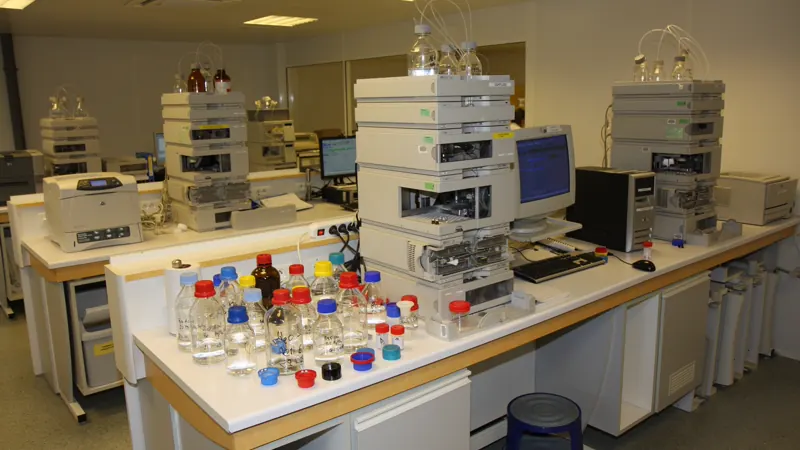
Because TB-500 is a product name rather than a pharmacopoeial substance, identity checks matter more than usual. For research use, documentation should state the sequence and an observed mass that matches it: about 889 g/mol for Ac-LKKTETQ, or about 4,963 g/mol for full-length Tβ4. The two differ by more than 4,000 g/mol, which mass spectrometry resolves easily. A missing N-terminal acetyl group lowers the mass by 42 Da, enough to tell the acetylated fragment from the free heptapeptide. Our explainer on how HPLC and mass spectrometry test peptide identity and purity covers what those figures mean in practice. TB-500 is supplied for laboratory research only.
How TB-500 compares with BPC-157
TB-500 is often mentioned in the same breath as BPC-157, but the two are unrelated molecules with different origins, sizes and proposed mechanisms. See BPC-157 vs TB-500 compared for a side-by-side table, and our BPC-157 research overview for that peptide's literature.
Frequently asked questions
Is TB-500 the same as thymosin beta-4?
No. Analytical studies of products sold as TB-500 identified Ac-LKKTETQ, a synthetic, N-acetylated copy of residues 17 to 23 of thymosin beta-4, which is itself a 43-residue peptide. The fragment weighs about 889 g/mol against about 4,963 g/mol for the full protein. Most published research, including the human trials, used full-length thymosin beta-4.
What is the sequence of TB-500?
PubChem and the doping-control literature identify TB-500 as Ac-Leu-Lys-Lys-Thr-Glu-Thr-Gln-OH, written Ac-LKKTETQ, with molecular formula C38H68N10O14, molar mass 889.0 g/mol and CAS number 885340-08-9. It corresponds to residues 17 to 23 of mature thymosin beta-4, with an acetyl group added to the N-terminal leucine.
Has TB-500 been tested in humans?
Not in any published trial we could find. The human studies in the literature, including a phase I intravenous safety trial and phase II eye-drop trials, used full-length thymosin beta-4 rather than the fragment. The US FDA states that it has not identified any human exposure data for drug products containing the thymosin beta-4 fragment known as TB-500.
Is TB-500 legal in Australia?
In the June 2026 Poisons Standard, TB-500 and thymosin beta 4 are both listed in Schedule 4, prescription-only medicines, and both appear in Appendix D, clause 5, which covers poisons that must not be possessed without authority such as a legal prescription. Scheduling is applied through state and territory legislation, so details depend on jurisdiction.
Is TB-500 banned by WADA?
Yes. The 2026 WADA Prohibited List includes thymosin-β4 and its derivatives, naming TB-500 as an example, in class S2.3, growth factors and growth factor modulators, which are prohibited at all times. Anti-doping laboratories have published methods that detect the acetylated LKKTETQ peptide and its metabolites in urine and plasma samples.
References
Esposito S, Deventer K, Goeman J, Van der Eycken J, Van Eenoo P. Synthesis and characterization of the N-terminal acetylated 17-23 fragment of thymosin beta 4 identified in TB-500, a product suspected to possess doping potential. Drug Test Anal. 2012;4(9):733-8. PubMed 22962027
Ho EN, Kwok WH, Lau MY, et al. Doping control analysis of TB-500, a synthetic version of an active region of thymosin β4, in equine urine and plasma by liquid chromatography-mass spectrometry. J Chromatogr A. 2012;1265:57-69. PubMed 23084823
US Food and Drug Administration. Certain Bulk Drug Substances for Use in Compounding that May Present Significant Safety Risks (content current as of 22 April 2026). Source
National Center for Biotechnology Information. PubChem Compound Summaries for CID 62707662 (TB-500, Ac-LKKTETQ) and CID 16132341 (thymosin beta-4, timbetasin). Accessed September 2026. Source
UniProt Consortium. UniProtKB entry P62328, Thymosin beta-4 (TMSB4X), Homo sapiens. Accessed September 2026. Source
Crockford D. Development of thymosin beta4 for treatment of patients with ischemic heart disease. Ann N Y Acad Sci. 2007;1112:385-95. PubMed 17947592
Therapeutic Goods (Poisons Standard—June 2026) Instrument 2026 (F2026L00633), registered 28 May 2026, commenced 1 June 2026. Schedule 4 and Appendix D, clause 5. Federal Register of Legislation. Source
World Anti-Doping Agency. World Anti-Doping Code International Standard: Prohibited List 2026 (in effect 1 January 2026). Classes S0 and S2.3. Source
Philp D, Huff T, Gho YS, Hannappel E, Kleinman HK. The actin binding site on thymosin beta4 promotes angiogenesis. FASEB J. 2003;17(14):2103-5. PubMed 14500546
Sosne G, Qiu P, Goldstein AL, Wheater M. Biological activities of thymosin beta4 defined by active sites in short peptide sequences. FASEB J. 2010;24(7):2144-51. PubMed 20179146
Malinda KM, Sidhu GS, Mani H, et al. Thymosin beta4 accelerates wound healing. J Invest Dermatol. 1999;113(3):364-8. PubMed 10469335
Bock-Marquette I, Saxena A, White MD, Dimaio JM, Srivastava D. Thymosin beta4 activates integrin-linked kinase and promotes cardiac cell migration, survival and cardiac repair. Nature. 2004;432(7016):466-72. PubMed 15565145
Mayfield CK, Bolia IK, Feingold CL, et al. Injectable Peptide Therapy: A Primer for Orthopaedic and Sports Medicine Physicians. Am J Sports Med. 2026;54(1):223-229. PubMed 41476424
Ruff D, Crockford D, Girardi G, Zhang Y. A randomized, placebo-controlled, single and multiple dose study of intravenous thymosin beta4 in healthy volunteers. Ann N Y Acad Sci. 2010;1194:223-9. PubMed 20536472
Sosne G, Ousler GW. Thymosin beta 4 ophthalmic solution for dry eye: a randomized, placebo-controlled, Phase II clinical trial conducted using the controlled adverse environment (CAE) model. Clin Ophthalmol. 2015;9:877-84. PubMed 26056426
Research use only. This article summarises published scientific literature
for educational purposes. It is not medical advice and does not describe or endorse human
or veterinary use. Compounds supplied by Titan Peptides are for laboratory research only
and are not approved therapeutic goods in Australia.
Two peptides that are often mentioned together but have nothing structurally in common. A side-by-side look at where BPC-157 and TB-500 come from, what studies reported, and where each sits under Australian and WADA rules.
A plain-English review of the BPC-157 literature: where the peptide came from, what animal and cell studies reported, why human evidence is so thin, and where it sits under Australian scheduling and anti-doping rules.
How reverse-phase HPLC and mass spectrometry are used to test peptide purity and identity, how to read a chromatogram and a mass spectrum, and what each method cannot tell you.